

What was sold as a clean, fast operation to break Iran’s leadership is starting to look like a grinding war of attrition. Instead of a quick victory, the conflict has produced heavy casualties, mass displacement, and energy-market shockwaves that are being felt far beyond the Middle East.
From the beginning, this war has been wrapped in competing narratives. On one side, official messaging insists that success is just around the corner. On the other, the reality on the ground suggests something far messier: a conflict that has failed to achieve its opening goals and now risks expanding into a wider regional crisis.
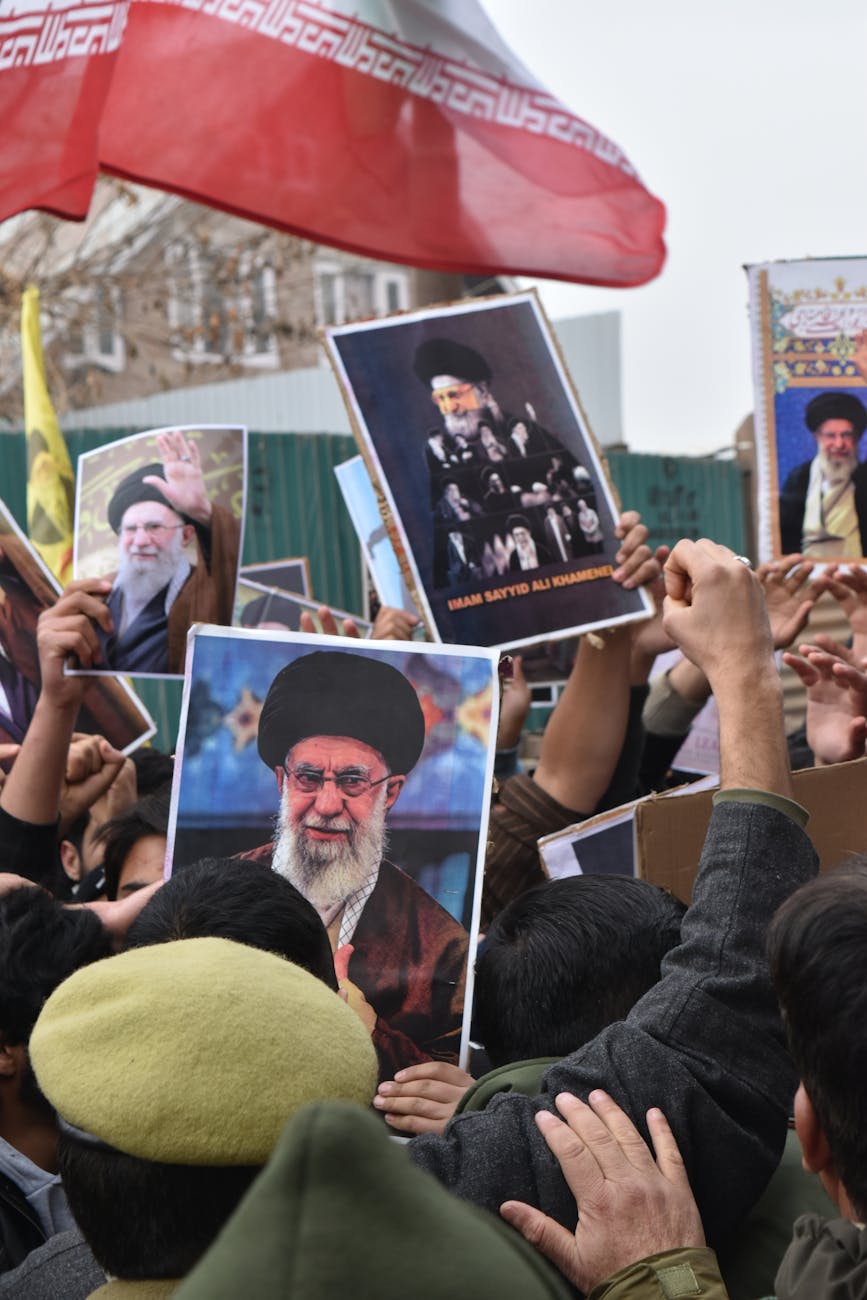
The first mistake was believing that a decapitation strike would trigger collapse. The logic was simple on paper: remove key leaders, disrupt command structures, and hope the state fractures from within. But Iran is not organized like a system that falls apart when one or two figures are removed. It is built with layers of redundancy, distributed command, hardened facilities, and a political culture shaped by decades of pressure and survival. Instead of collapsing, it adapted.
That is the central problem for Washington and its allies. The war was supposed to be short enough to manage politically and militarily. Now it is becoming long enough to expose the limits of air power, intelligence fantasies, and public messaging. Once a conflict enters this phase, the gap between what leaders claim and what events actually show starts to widen fast.
The diplomatic angle has also taken a hit. If negotiations are used only as cover while military plans are already in motion, then diplomacy becomes theater rather than a path to de-escalation. That creates a dangerous precedent: talks are no longer seen as a way out of conflict, but as another instrument of pressure. In that environment, trust disappears and escalation becomes easier than compromise.
The energy dimension is just as important. Every major crisis involving the Gulf region sends tremors through global oil markets, but this one has been especially disruptive. A sharp rise in crude prices does not stay confined to traders and speculators. It feeds directly into transport costs, industrial production, food prices, and household budgets around the world. In other words, a war framed as strategic statecraft quickly becomes a tax on ordinary people everywhere.
And the human cost is devastating. Civilian deaths, destroyed infrastructure, and mass displacement are not side effects; they are part of what makes modern war so destructive. Even when governments talk about precision strikes and limited objectives, the reality is that air campaigns hit homes, hospitals, roads, utilities, and the daily systems people need to survive. That is why these wars tend to break societies long before they produce any meaningful political outcome.
There is also a military contradiction at the heart of the campaign. If a power fires huge numbers of missiles, flies repeated bombing missions, and expands deployments across the region, it is already paying a significant cost. Yet if it then claims victory without securing its stated objectives, the result is a credibility problem. Leaders are trapped between escalation and retreat. Escalation looks risky; retreat looks like defeat. That is how strategic traps are formed.
The regional spread of the conflict makes the situation even more unstable. Once other actors begin responding — whether through attacks, blockades, or harassment of shipping lanes — the war is no longer a bilateral confrontation. It becomes a regional system failure. Gulf states are then forced into impossible choices: rely on U.S. protection while fearing retaliation, or distance themselves and risk losing security guarantees.
Europe is not outside this picture either. Even when European governments insist the war is not theirs, their territory and infrastructure can still be part of the machinery that sustains it. Bases, logistics hubs, command centers, airfields, and intelligence networks all matter. In modern warfare, support is participation. You do not need to fire the missiles to help launch them.
The deepest problem, though, is political imagination. If the real goal is not just to weaken a government but to reshape an entire region into something more controllable, then the war is not about one nuclear issue, one border dispute, or one military operation. It is about power architecture. It is about deciding which states are allowed to act independently and which are expected to obey.
That kind of ambition almost always produces blowback. States do not disappear neatly because an outside power wants them gone. Societies resist, adapt, fragment, and fight back. Local actors find new strategies. Underground systems emerge. Alliances shift. The more a war tries to impose a total political redesign, the more likely it is to generate the opposite of stability.
So the real question now is not whether the first phase of the war succeeded. It clearly did not. The real question is whether the planners are willing to admit that the original strategy has failed before the conflict expands even further. Because once a war becomes about saving face, it becomes much harder to stop.
What began as a demonstration of force is increasingly looking like a test of endurance that nobody can fully control. And in that kind of war, there are rarely clean winners — only deeper damage, broader consequences, and a longer shadow over the region and the world.