

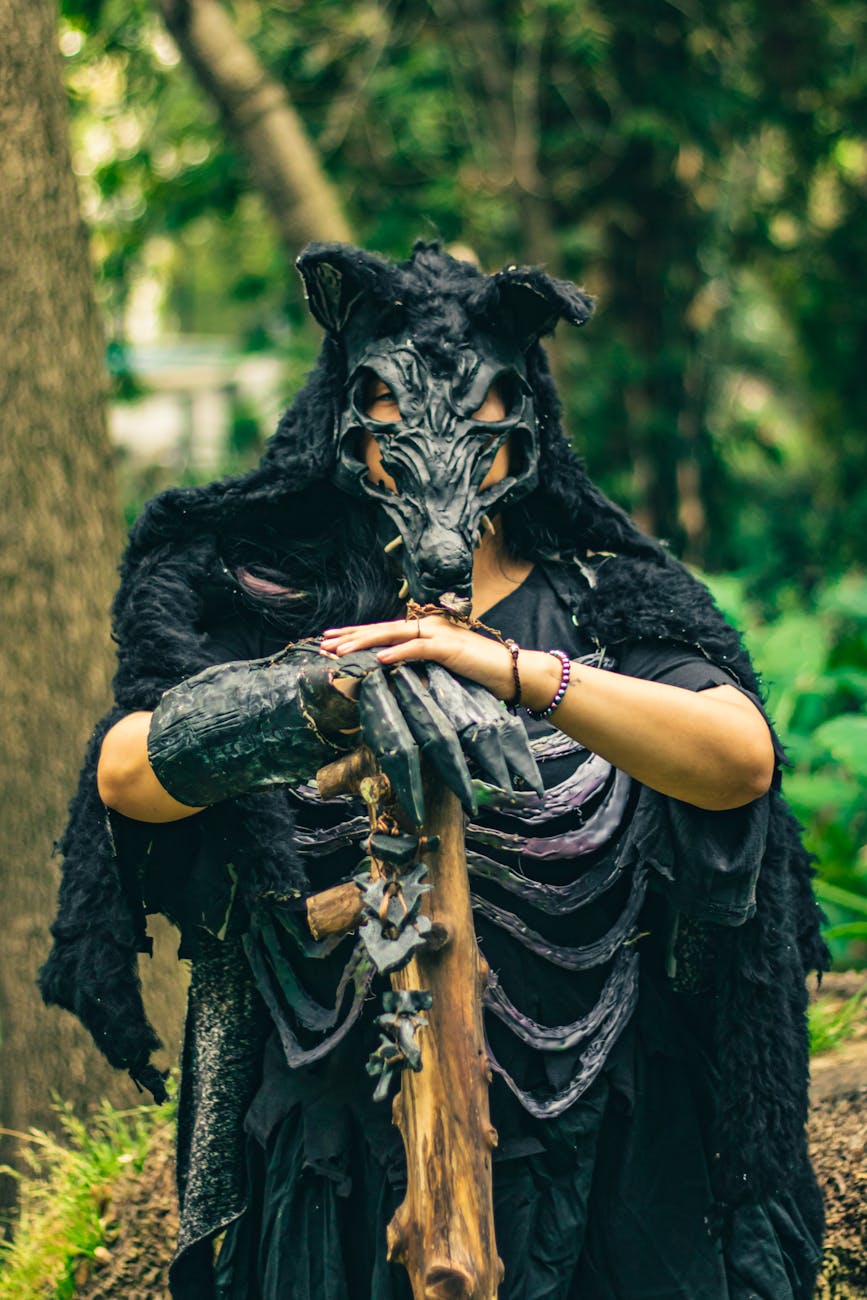
In an age where identity is debated as fiercely as it is posted, a new cultural phenomenon has begun to ripple through social media: the world of the therians. Young people, mostly adolescents, describe feeling a deep inner connection to a specific animal—wolves, foxes, cats, or other species—and some go so far as to say they are “therian” in a spiritual or psychological sense. On TikTok, Instagram, and private forums, you see them wearing masks, moving on all fours, and talking about an identity that feels, to them, more real than it looks on the outside.
To many adult observers, the trend looks like a strange internet game, a passing aesthetic, or even a reason to roll their eyes. But to the young people involved, it often feels like something much more personal: a way of expressing who they are, or who they think they might be. In a world of constant comparison, pressure, and isolation, the therian space can become a kind of tribe, a place where they feel seen, understood, and accepted.
That is the key point. The real question is not whether someone “feels like a wolf” or “thinks like a fox.” The deeper question is what pushes a generation to seek identity in such symbolic, performative, and sometimes extreme forms. Therian communities are not only about costumes or masks; they are about belonging, difference, and the search for a self in a digital age that offers endless options but rarely deep reassurance.
Psychologists and sociologists have noted that many youth subcultures function as identity laboratories. Adolescence is a time of emotional turbulence, fragmentation, and experimentation. The therian world, like the punks, emos, or goths of earlier decades, offers symbols, narratives, and rituals that help young people name their feelings and find others who feel similarly lost or misunderstood.
For some, the animal connection is spiritual: a sense of being closer to nature, more “wild,” more authentic. For others, it is a metaphor: a way to talk about instincts, repression, or the desire to break free from social expectations. The line between play, symbolism, and literal belief is often blurred, and that is precisely what makes the debate so intense. When the same image shows up on the screen, in public streets, and in news reports, it becomes hard to know whether it is art, drama, identity, or distress.
In this context, the accusation that “they’re just kids playing dress‑up” can feel dismissive, while the panic that “this is a mental disorder” can feel alarmist. The truth likely lies somewhere in between: many young people are using the therian label as a form of exploration, not as a diagnosis. They are trying on roles, testing boundaries, and building narratives that feel meaningful to them in a world that often feels chaotic and indifferent.
That is why the pedagogical challenge is so important. In places like Cuba, where community, family, and education have long been pillars of social cohesion, the appearance of these digital subcultures should not be met with ridicule or automatic rejection, but with curiosity and dialogue. The goal is not to endorse every trend, but to understand what young people are feeling beneath the jokes, the memes, and the viral videos.
The heart of the issue is not the animal mask. It is the desire to be heard. In a generation growing up surrounded by screens, likes, and cancellations, being part of a small group that “gets you” can feel like a lifeline. The same digital platforms that spread the trend can also amplify loneliness, anxiety, and the fear of being “wrong” or “too much.” When that happens, symbolic identities like the therian experience can become a refuge, a way of saying, “I am not just what the world expects me to be.”
Of course, there are limits. Experts have warned that warning signs—deep withdrawal, loss of interest in school, self‑harm, or a literal belief that the self has fully become an animal to the point of losing touch with reality—should be taken seriously and treated with professional care. The distinction between expressive identity and clinical distress matters. But treating every unusual expression as a pathology is just as dangerous as ignoring genuine pain.
The true challenge for society is not to stop the trend, but to learn how to listen within it. Every generation invents its codes, and every generation is judged by the one before it. The therian movement may fade, morph, or be absorbed into new forms of self‑expression. But what will remain is the same question that has always existed: how do we accompany young people in building a strong, conscious, and humane identity?
In that sense, the therian phenomenon is not so much about animals as it is about humans. It is about the need for meaning, community, and acceptance in a world that changes faster than most adults can keep up with. The masks may look strange, but behind them, the desire is profoundly familiar: to be seen, to be respected, and to be told that, even if you are different, you are not alone.