

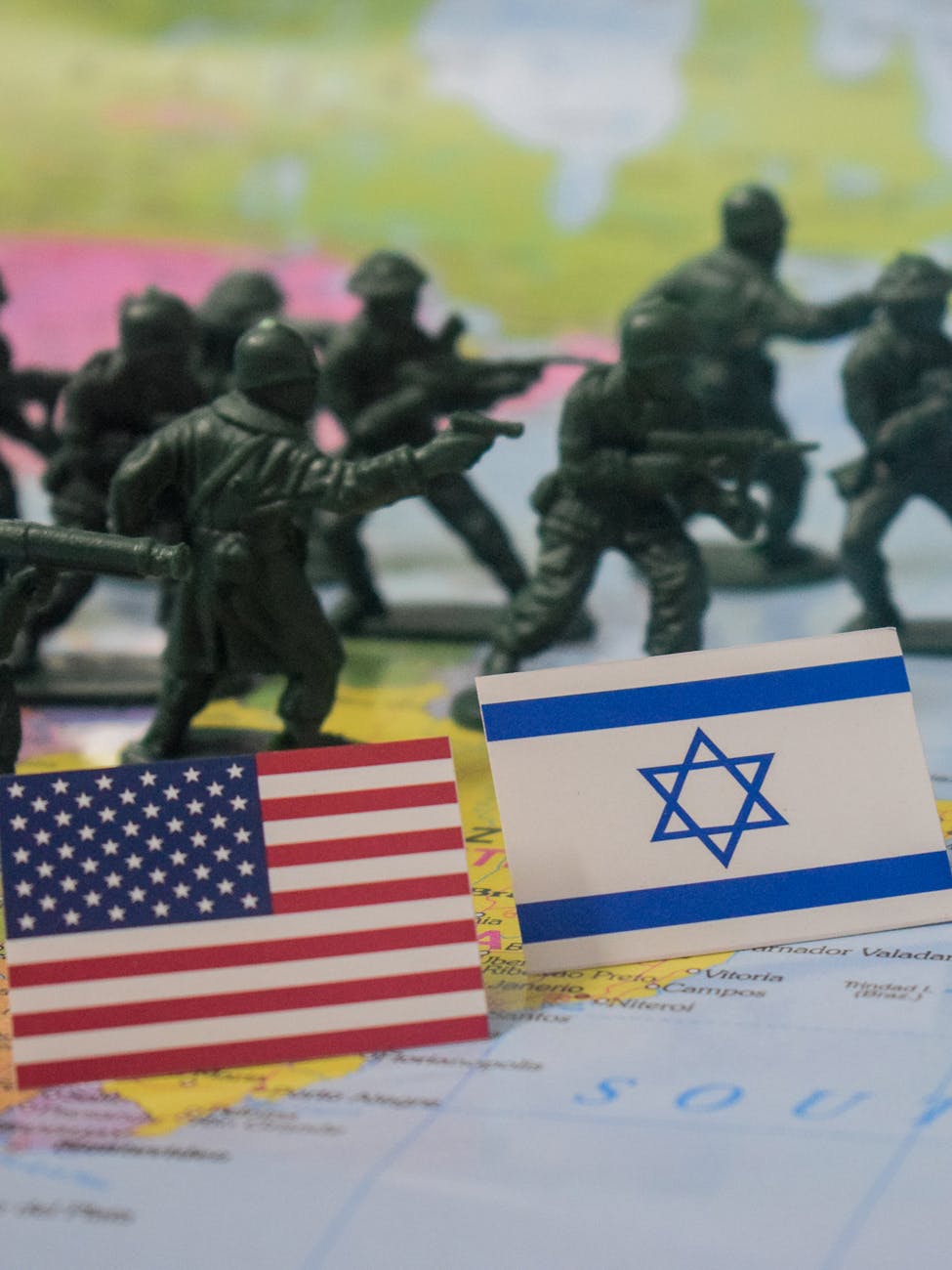
Donald Trump has built his entire political identity around the slogan “America First.” According to him, everything he does is for the United States: the economy, the military, the border, the victories. Yet when it comes to the war against Iran, many people are asking a different question: is this really “America First,” or has it become something closer to “Israel First”? The line between defending U.S. interests and pushing a war that serves the geopolitical priorities of another country is not just thin—it is collapsing.
Trump speaks constantly about “ending tyranny,” about “protecting allies,” about “securing the Middle East.” But in practice, the war against Iran has increasingly been framed as a project to contain Iran’s regional power and to protect Israel at almost any cost. The narrative sold in Washington is that Iran is a threat to the U.S., to global oil, and to “our way of life.” But for many outside observers, especially in the Global South, what they see is a conflict that looks far more Israeli‑centric than American. It is a war where the beneficiary, in both rhetoric and strategy, is often Israel.
That does not mean that the United States has no stake in the Middle East. The U.S. oil markets, global shipping routes, and strategic alliances are all genuinely at play. But what critics point out is that the intensity of the war, the speed of escalation, and the refusal to negotiate seriously point toward a different center of gravity. In this context, the slogan “America First” starts to look more like a branding exercise than a genuine description of U.S. priorities.
Netanyahu, Israel’s prime minister, plays a central role in this story. Under his leadership, Israel has pushed for a hardline policy against Iran, insisting on maximum pressure, military strikes, and a reduced space for diplomacy. The Israeli government has framed its actions as a matter of survival, arguing that an empowered Iran is an existential threat to the Jewish state. But the way that threat has been executed has raised serious questions about human rights, international law, and the long‑term consequences of a war‑driven strategy.
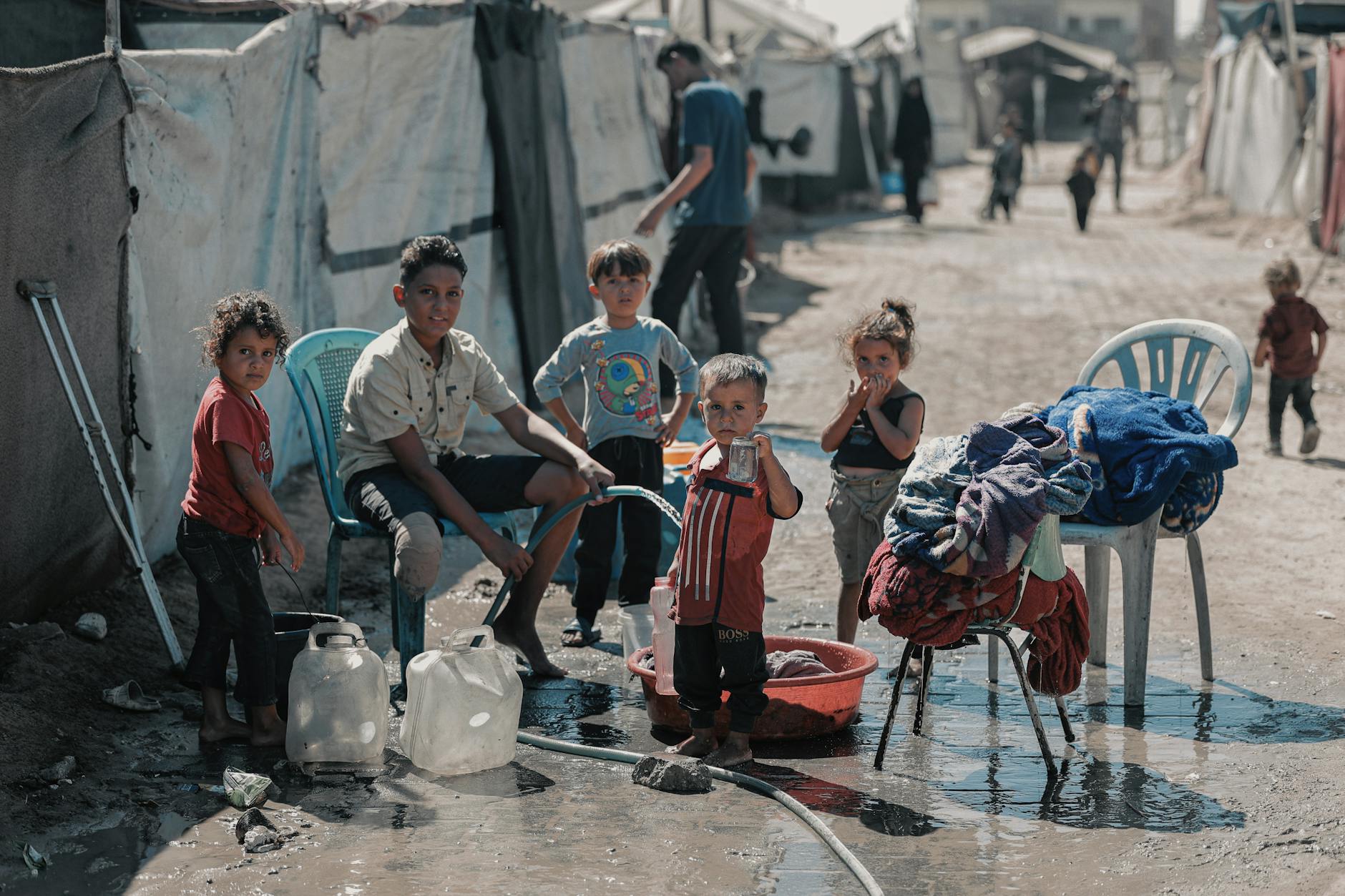
From the very beginning of the war, the civilian toll in Iran has been enormous. Thousands of deaths, hundreds of thousands of people displaced, and entire cities reduced to rubble. The bombardments have not targeted only military sites; they have hit residential areas, schools, hospitals, power plants, and water supplies. In many cases, these strikes have been described as disproportionate, if not outright illegal, under international humanitarian law. The use of cluster munitions, long‑range missiles, and high‑yield explosives has turned parts of Iran into a nightmare of suffering that would look familiar to anyone who has studied the worst moments of 20th‑century war.
This is the crux of the moral argument. The Jewish people have suffered perhaps the most brutal and systematic campaign of dehumanization and extermination in modern history under the Nazis. The images of ghettos, deportations, concentration camps, and industrialized killing are central to the Jewish historical memory. They are also central to the way many Jews understand their responsibility to protect others from similar horrors. But the behavior of the current Israeli government, and its active participation in a war that has devastated Iranian civilians, is placing that memory at a crossroads.
If the historical lesson of the Shoah is that governments that dehumanize entire populations end up committing atrocities, then what do we say when a state that claims to be born from the ashes of genocide behaves in ways that echo the very logic it once fought against? The ironic similarity is hard to ignore: the same language of “existential threat,” the same tendency to reduce the “other” to a dangerous abstraction, and the same willingness to sacrifice civilian lives in the name of security. The victims are different, the context is different, the power balance is different—but the pattern of moral erosion is disturbingly similar.
Of course, the situation is not equivalente, and saying otherwise would be absurd and offensive. The State of Israel, as a political and geographic reality, faces real security challenges. The Iranian regime has its own record of repression, human‑rights abuses, and regional aggression. No one is arguing that the world should turn a blind eye to any of that. The criticism is not about denying Israel’s right to exist or to defend itself; it is about the means, the scale, and the ethics of the war being fought now.
Trump and Netanyahu have chosen a path of escalation, not diplomacy. The rhetoric coming out of Washington constantly talks about “victory,” “dominance,” and “decisive action,” while the real results—casualties, refugees, hunger, broken hospitals—look more like long‑term trauma than a quick, clean win. The economic and human‑rights costs of this war will be measured for generations, not just in Iran but in the legitimacy of the countries that support it.
In the end, “America First” and “Israel First” are not just slogans—they are tests. A test of whether a country can pursue its interests without losing its moral compass, and a test of whether a people who have suffered genocide can build a future that does not replicate the logic of the past. So far, the answers emerging from the war against Iran are deeply troubling. The world is watching: not just the bombs, but the conscience of those who authorize them.