


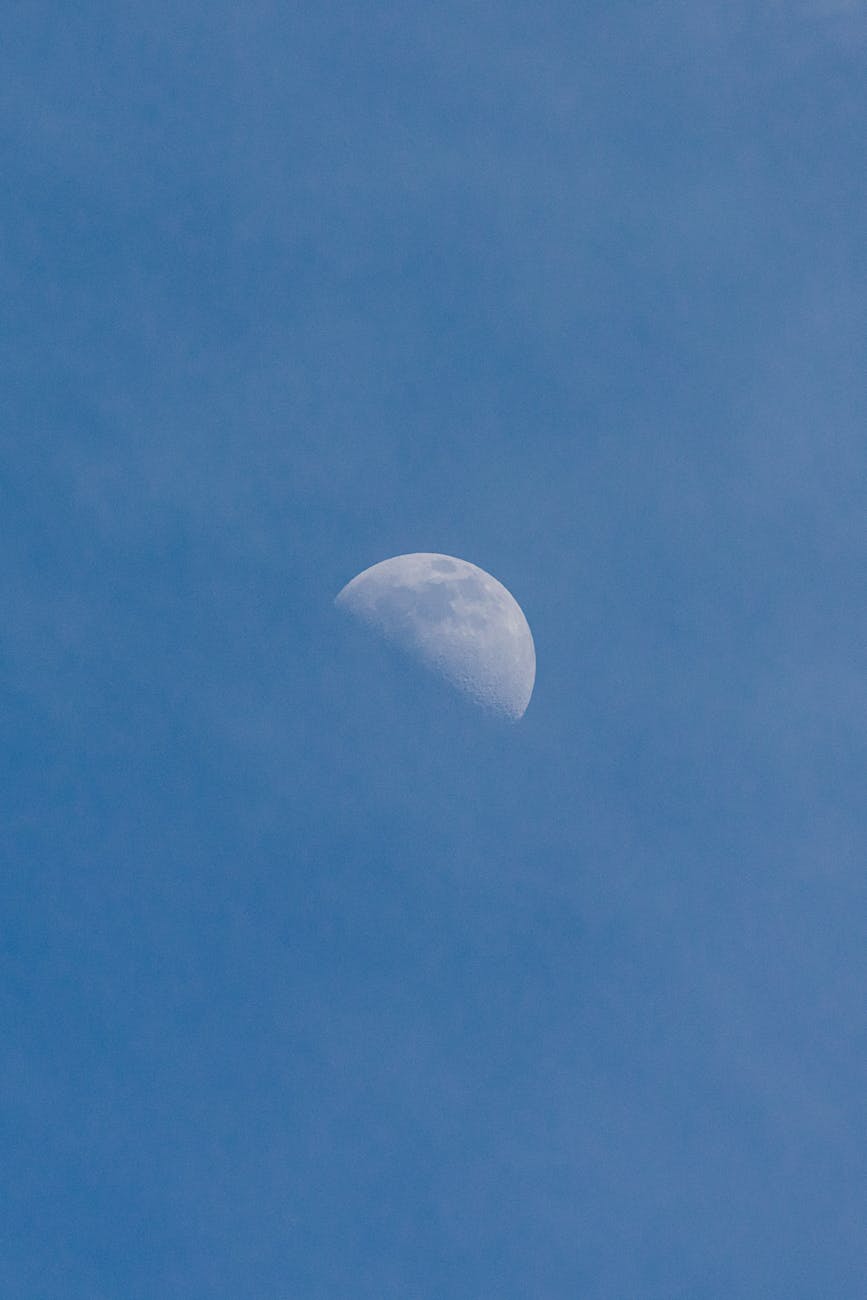
The world looked up to the sky this week, but not everyone saw the same thing. NASA’s Artemis II mission, the first crewed flight around the Moon in more than 50 years, captured global attention with a historic launch that once again placed the United States at the center of lunar exploration. The images spread across the world in minutes, and the praise for NASA was well deserved. But while the spotlight was fixed on the American mission, another major space program was advancing with far less noise: China’s.
In Beijing, the tone was more restrained. Chinese officials recognized the importance of Artemis II, but they also highlighted something that many in the West tend to overlook: China continues to expand its space program at a rapid pace, with multiple missions, new launch systems, and long-term plans for the Moon. The contrast is striking. One country celebrates a single dramatic moment; the other builds a program through steady, repeated progress.
Just one day before Artemis II, China launched the Lijian-2 Yi rocket, a 53-meter vehicle designed to carry up to eight tons of payload, as part of its broader effort to develop next-generation space transport. Days earlier, a Long March 2C rocket placed the experimental Shiyan 33 satellite into orbit, marking another step in a program that has become one of the most active in the world. These launches did not come with the same global spectacle as Artemis II, but they were part of a larger pattern that is reshaping the balance of power in space.
China’s calendar for 2026 is already packed. The China Manned Space Agency has announced two crewed missions and one cargo resupply flight for this year, along with continued progress toward a human Moon landing before 2030. Beijing also plans to send astronauts from Hong Kong, Macao, and Pakistan on future missions, underscoring the international dimension of its ambitions. Far from being a side player, China is positioning itself as a central force in the next phase of lunar exploration.
The lunar program is not only about rockets and spacecraft. China is also building the technical foundation for long-term survival beyond Earth. The Long March-10 rocket has already undergone low-altitude testing, the Mengzhou spacecraft is expected to be tested in lunar orbit without crew, and the Lanyue lander is scheduled to make its debut later this decade. These systems are designed to support China’s first crewed Moon landing, a goal officially targeted before 2030.
What makes China’s strategy especially significant is that it is not simply trying to arrive on the Moon. It is trying to stay there. Chinese planners, together with Russia, have outlined a future International Lunar Research Station that could be built using materials sourced from the Moon itself. That idea is not theoretical. China has already tested 3D printing techniques using lunar soil simulants, and the Chang’e-8 mission is expected to examine similar methods under real lunar conditions around 2028. If successful, this would reduce dependence on Earth-based supplies and open the door to more sustainable off-world infrastructure.
That long-term vision is reinforced by China’s work on agriculture and biological research in space. Since the late 1980s, Chinese scientists have been sending seeds into orbit to study how radiation and microgravity affect crop development. Rice, wheat, cotton, and tomatoes have all been part of these experiments, which may eventually support food production in space or on other worlds. The results are not immediately revolutionary, but they reflect a clear strategic logic: accumulate knowledge now for a future in which off-planet life may require self-sufficiency.
This is where the comparison with NASA becomes especially interesting. The United States still holds major advantages in technology, experience, and international partnerships. Artemis II is a historic achievement, and NASA remains the benchmark for crewed deep-space exploration. But China has something else that may prove just as important in the long run: continuity. Its program is planned over decades, protected from electoral cycles, and designed around steady, cumulative progress.
Experts point out that this difference matters. NASA and its partners may still be ahead in certain technical areas, but the real challenge is no longer just reaching the Moon. It is the ability to operate there reliably, especially in difficult regions such as the lunar south pole, where water ice may exist and where logistics are extremely complex. In that race, the winner may not be the first to arrive, but the one best able to build, supply, and endure.
Politics also shape the story. The 2011 Wolf Amendment restricted U.S.-China space cooperation and effectively shut China out of the International Space Station. Rather than slowing Beijing down, the decision pushed China to accelerate its own independent system. Today, the Tiangong space station is fully operational, and China is openly inviting foreign partners to join future missions. If the ISS retires around 2030 as planned, Tiangong could become one of the few inhabited orbital platforms left in operation—and possibly the only one outside Western control.
So the real meaning of Artemis II may go far beyond a heroic flight around the Moon. It is a reminder that the Moon is once again becoming a strategic frontier. The images of NASA’s success are real, but so is the quieter, more methodical rise of China’s lunar program. The future of space will not be decided by spectacle alone. It will depend on who can build the most durable presence, who can cooperate most effectively, and who can turn lunar ambition into lasting capability.