


By Dr. Naresh Subbarao
Senior Science Correspondent, Wire World News
February 23, 2026
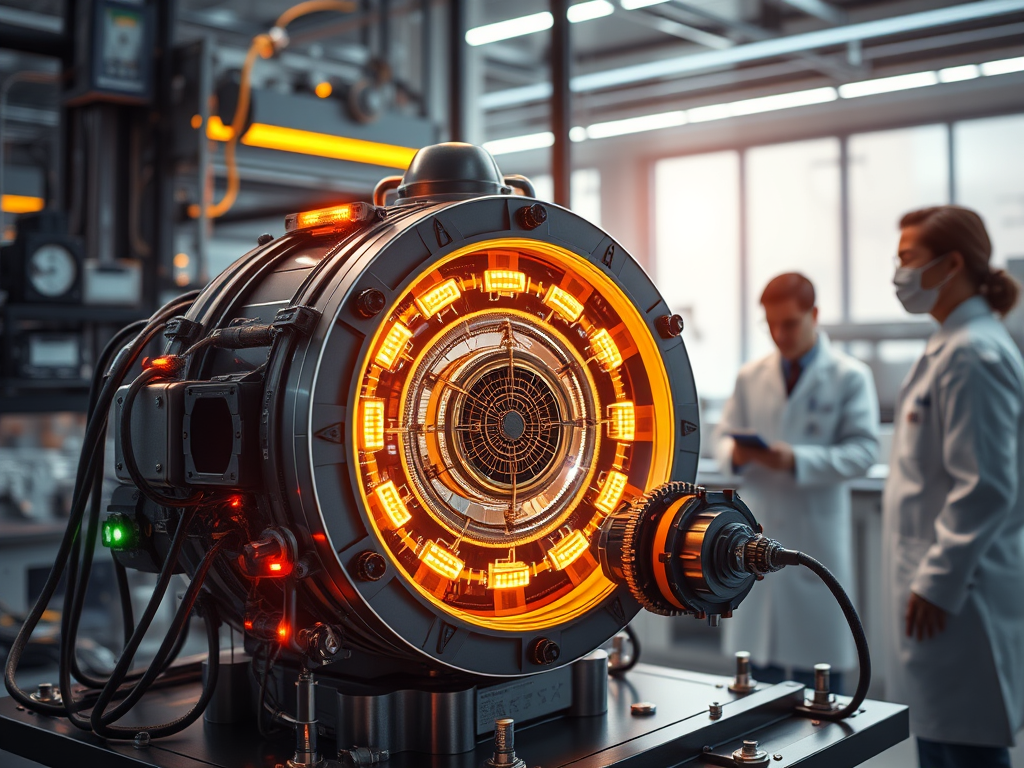
For decades, nuclear fusion has been the holy grail of clean energy—a promise of limitless power without the waste or meltdown risks of traditional nuclear plants. Now, in facilities from California to southern France, teams of scientists are flipping the switch on pilot plants designed not just to demonstrate fusion reactions, but to produce actual electricity that could one day light cities. This isn’t science fiction anymore; it’s engineering on the brink of practicality.
The breakthrough hinges on two converging trends: smaller, more efficient reactor designs and better magnets. Traditional fusion experiments, like the massive international ITER project, rely on enormous tokamaks that confine superheated plasma with magnetic fields. Private companies have taken a different tack, building compact machines that use high-temperature superconductors to create stronger fields in less space. These innovations slash costs and timelines, turning what was a multi-billion-dollar public dream into ventures backed by tech billionaires and energy giants.
In the United States, outfits like Commonwealth Fusion Systems are targeting net electricity by late this year, while Europe’s ITER partners push toward operational milestones. China and the UK aren’t far behind, with their own spherical tokamaks promising even higher efficiency. Success here wouldn’t just validate decades of research; it would challenge the dominance of fossil fuels and renewables alike. Fusion offers steady baseload power—running 24/7 without weather dependence—potentially reshaping global energy markets and climate strategies.
But the road isn’t smooth. Even optimistic timelines put commercial plants a decade away, and scaling from prototypes to grids means solving headaches like tritium fuel supply and heat management. Critics worry about overhyping: if pilots underperform, public and investor patience could fray. Still, governments are betting big, with subsidies and partnerships flowing in from Washington to Beijing. Fusion’s appeal is geopolitical too—in a world racing for energy independence, the first nation to crack it could redefine power balances.
For everyday people, the stakes are personal. Cheaper, cleaner electricity could slash bills, power desalination for water-scarce regions and electrify industries now too dirty for batteries alone. Imagine heavy manufacturing or aviation fuels produced without carbon emissions. Scientists caution that fusion complements, not replaces, solar and wind, but its arrival would accelerate the shift away from coal and gas giants.
As 2026 unfolds, watch the data from these pilots. Positive results could spark a fusion rush; delays might temper the hype. Either way, the world is witnessing a pivot: energy science moving from theoretical elegance to gritty, real-world deployment.