

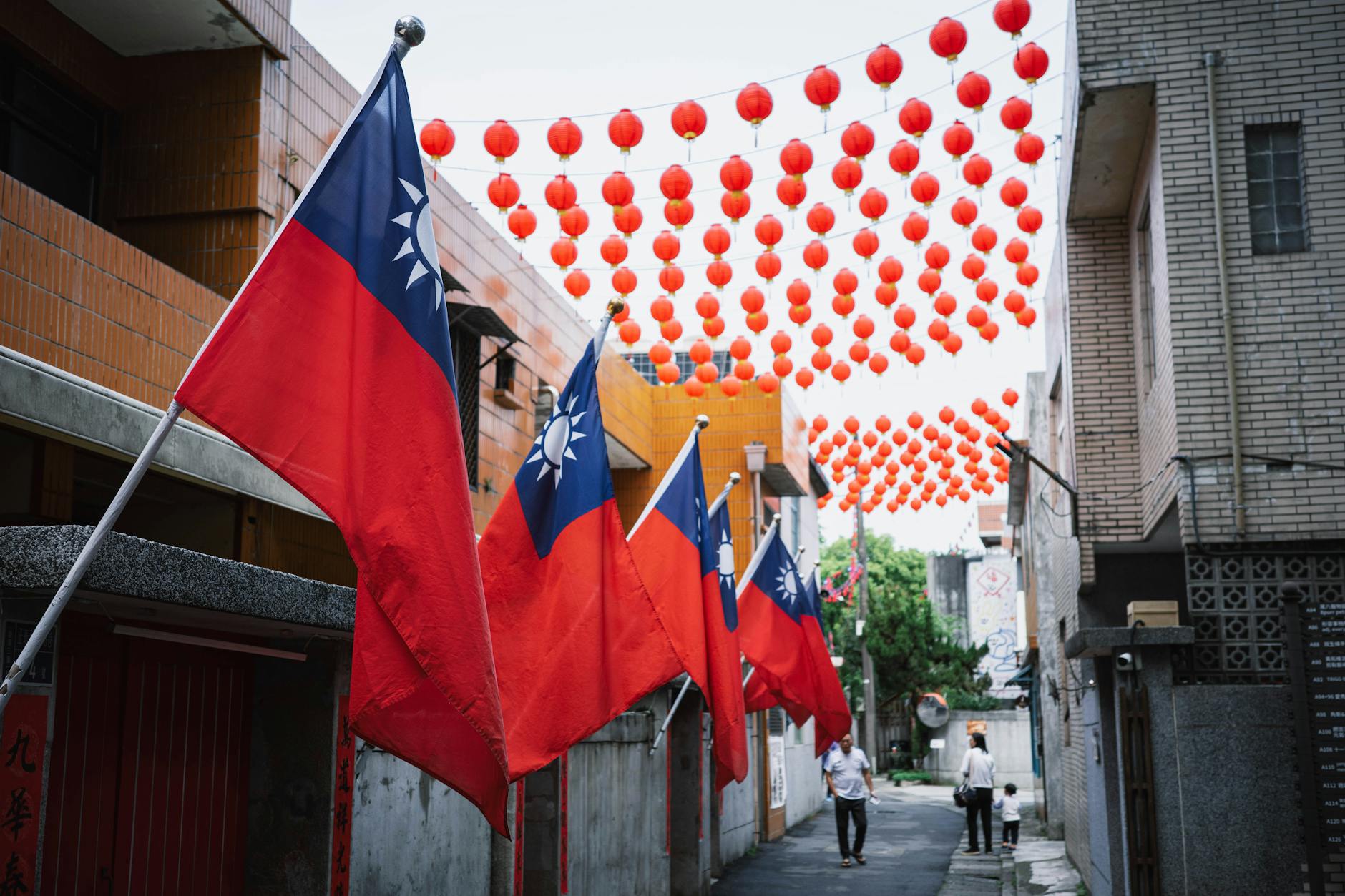
Taiwan’s opposition leader Cheng Li-wun has made a rare and politically sensitive visit to Beijing, arguing that closer contact with China is necessary to prevent war. Her trip comes at a moment of deep mistrust across the Taiwan Strait, with China’s President Xi Jinping warning that Beijing will never tolerate any move toward formal Taiwanese independence.
Cheng, who heads the Kuomintang, is the first leader of the party to travel to China in a decade. During the visit, she framed the meeting as a “journey for peace,” saying Taiwan must choose dialogue over escalation and that the island should not become a permanent flashpoint for military confrontation. After meeting Xi, she repeated that the future of cross-strait relations should not be decided by conflict or fear.
Xi, for his part, used the encounter to restate Beijing’s hard line. He stressed confidence in eventual reunification and reiterated that China rejects any form of Taiwanese independence. That message is consistent with Beijing’s long-standing position: Taiwan is part of China, and any political movement that pushes toward formal separation will be met with pressure rather than compromise.
The visit matters because the political channels between Taipei and Beijing have been nearly frozen for years. Since Taiwan’s Democratic Progressive Party came to power in 2016, official contact has narrowed sharply, and Beijing has treated the island’s current leadership as politically unacceptable. In that climate, Cheng’s trip is unusual not only for its symbolism, but also because it breaks a long period of direct engagement between the two sides.
The Kuomintang has historically been more open to dialogue with the mainland than Taiwan’s ruling party, but that position remains controversial at home. Supporters argue that communication reduces the risk of war and creates room for stability. Critics, however, fear that such visits may weaken Taiwan’s bargaining position and hand Beijing a propaganda victory at a sensitive time.
Cheng’s central argument is that peace requires political courage, even when that means facing criticism. Her Beijing visit is being presented as an attempt to lower tension, preserve dialogue, and keep the Taiwan Strait from becoming a military fault line. Whether it opens a real diplomatic channel or simply sharpens internal divisions in Taiwan will depend on how both sides respond in the coming weeks.
The episode highlights a broader reality: in cross-strait politics, every gesture carries strategic meaning. A handshake can be read as pragmatism, weakness, or provocation depending on who is watching. For now, Cheng’s message is clear—she is betting that contact is safer than confrontation.