


When NASA announced its renewed commitment to returning humans to the Moon under the Artemis program, many saw it as the natural continuation of humanity’s spirit of exploration. After all, more than half a century has passed since Apollo 17 left the lunar surface in 1972. But beyond the inspirational slogans and futuristic press releases, there’s a deeper geopolitical story unfolding — one shaped by competition, resources, and the need for technological dominance.
Artemis II, scheduled for launch in 2026, is set to be the first crewed lunar mission in decades. Its goal is not to land on the Moon yet, but to send astronauts around it, testing systems essential for future human settlement. The mission is symbolic — a declaration that the United States is once again claiming leadership in space. However, beneath the symbolism lie interests that stretch far beyond scientific curiosity.
Beyond Exploration: The Geopolitical Chessboard
Space exploration has always been political. During the Cold War, the Apollo program served as both a scientific enterprise and a public display of technological superiority over the Soviet Union. Fast-forward to the 21st century, and the same dynamic plays out again — only now, the competitors are China and Russia.
China’s rapid rise in space technology has alarmed policymakers in Washington. Its Chang’e missions have successfully landed on the far side of the Moon, collected soil samples, and even begun experiments related to lunar resource extraction. Russia, though operating with fewer resources, is partnering with China on projects to build an International Lunar Research Station — an alternative to the U.S.-led lunar initiatives.
For the United States, Artemis is the answer to these growing challenges. It signals that America will not cede leadership of space to any other power. More importantly, it establishes a political and technological framework — through partnerships like the Artemis Accords — that defines how space activities should be conducted. Nearly 40 countries have signed these accords, agreeing to principles that favor transparency, peaceful exploration, and equitable resource use. In contrast, China and Russia are building their own cooperative structures, essentially creating two opposing blocs in space.
The Economics of Lunar Resources
Beyond geopolitics, there’s the economic factor — and it’s huge. The Moon contains valuable resources that could fuel the next phase of technological progress. Among them are rare earth elements, helium-3 (which could one day power nuclear fusion), and ice locked in the lunar poles that can be converted into water, oxygen, and hydrogen fuel.
China has already demonstrated its capacity to extract and analyze lunar samples, making it clear that resource exploitation is not science fiction but a near-term reality. The U.S., through Artemis, aims to catch up and position itself as a leader in lunar resource management. NASA and private companies see the Moon as a long-term investment: a stepping stone toward Mars, and an outpost that could support permanent human presence in space.
The competition is not just for minerals but for influence. Whoever controls lunar infrastructure — bases, communication networks, refueling stations — will control access to deeper space missions. That’s why Artemis II and its successors carry so much strategic importance. They are tests for technology that will underpin a sustainable lunar economy.
The Role of Private Industry
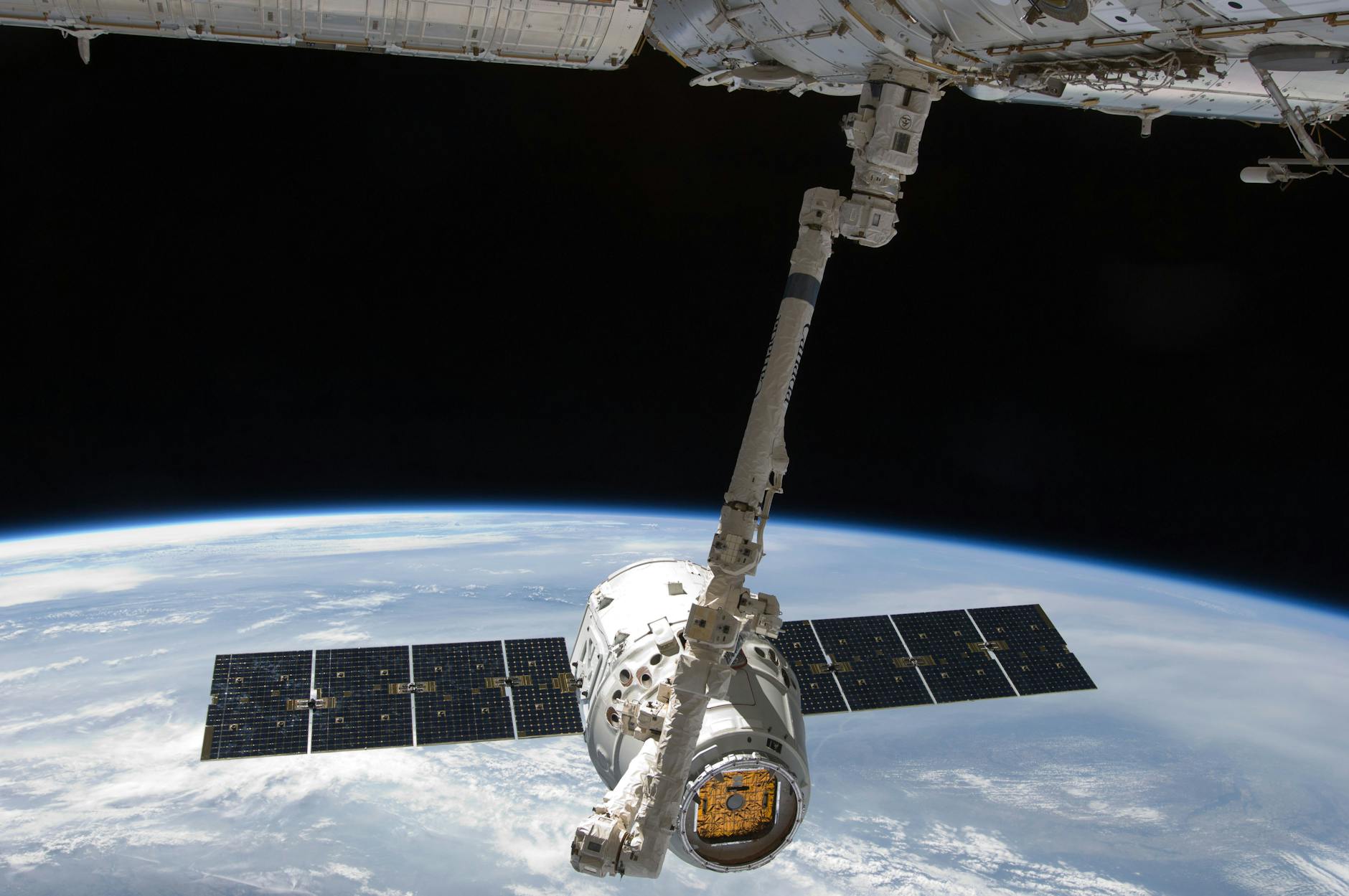
Unlike Apollo, the Artemis era is being shaped by partnerships with the private sector. Companies such as SpaceX, Blue Origin, and Lockheed Martin are developing spacecraft, landers, and support systems that integrate with NASA’s broader mission. This public-private cooperation reflects how global power works in the 21st century — innovation is distributed, but leadership still requires coordination and vision.
The commercial aspect also marks a shift in priorities. While Apollo was funded purely for national prestige, Artemis is meant to create opportunities for industry — from mining and construction to telecommunications. The Moon is becoming an economic frontier, not just a symbolic destination.
The Political Significance of Artemis II
Artemis II is more than a test flight; it’s a statement. It demonstrates technological readiness, renews national pride, and reminds the world of America’s enduring space leadership. For the U.S. administration, it’s also a strategic gesture — one that aligns with broader efforts to assert dominance in emerging technologies while restricting competitors’ access.
In the background, both China and Russia are observing closely. Each successful U.S. mission strengthens alliances, sets norms, and establishes de facto control over lunar governance. Space, once imagined as the realm of cooperation and scientific discovery, is increasingly becoming an arena for power politics.
Conclusion: A New Race on Familiar Ground
In essence, the real interests behind America’s return to the Moon combine science, strategy, and economics. The Moon is no longer a barren rock for symbolic flags but the next geopolitical frontier — a place where nations will compete for resources, prestige, and control over humanity’s future beyond Earth.
Artemis II may be labeled as a “mission of exploration,” but its greater purpose is clear: to ensure the United States leads the next chapter of space development before others claim the high ground. As competition intensifies, the question becomes not whether humans will live and work on the Moon, but under which flag they will do so.