


When Algorithms Govern: Will Democracy Survive the Age of AI?
By Erica Jhonson
Senior IA Correspondent, Wide World News
February 23, 2026
The future of democracy may not be decided at the ballot box, but in server rooms and data centres most citizens will never see. As artificial intelligence moves from predicting what we watch to predicting what we think and how we vote, the line between persuasion and manipulation becomes dangerously thin. The question is no longer whether AI will influence politics, but whether democratic systems can adapt before they are quietly hollowed out from within.
In theory, AI could strengthen democracy. It can help governments analyse vast amounts of data to allocate resources more fairly, predict where crises will emerge and even draft better policies. Imagine city councils that know in advance where infrastructure will fail, or health systems that anticipate disease outbreaks and respond before they spiral out of control. Automated translation tools can also break language barriers, allowing citizens to follow debates in real time regardless of their mother tongue. These are not distant possibilities; they are already emerging in pilot projects around the world.
Yet the same technologies carry a darker potential. Political campaigns now rely on micro‑targeted advertising that tailors messages to individual fears and desires. AI makes this far more precise and far cheaper. Instead of a few broad campaign promises, voters may be fed thousands of personalised narratives, each optimized to trigger an emotional reaction rather than inform. In such an environment, a shared public debate becomes harder to sustain. Citizens no longer encounter the same facts, only their own privately curated political realities.
The risk is not only manipulation of voters, but also manipulation of information itself. Generative AI makes it trivial to produce convincing fake audio, video and text at scale. Disinformation is no longer a matter of a few doctored photos; it can be an entire synthetic ecosystem of news sites, social media accounts and bots that respond instantly to events. When citizens cannot trust what they see and hear, cynicism deepens and conspiracy theories flourish. Democracies, which rely on some minimal level of trust in institutions and information, are uniquely vulnerable to this erosion.
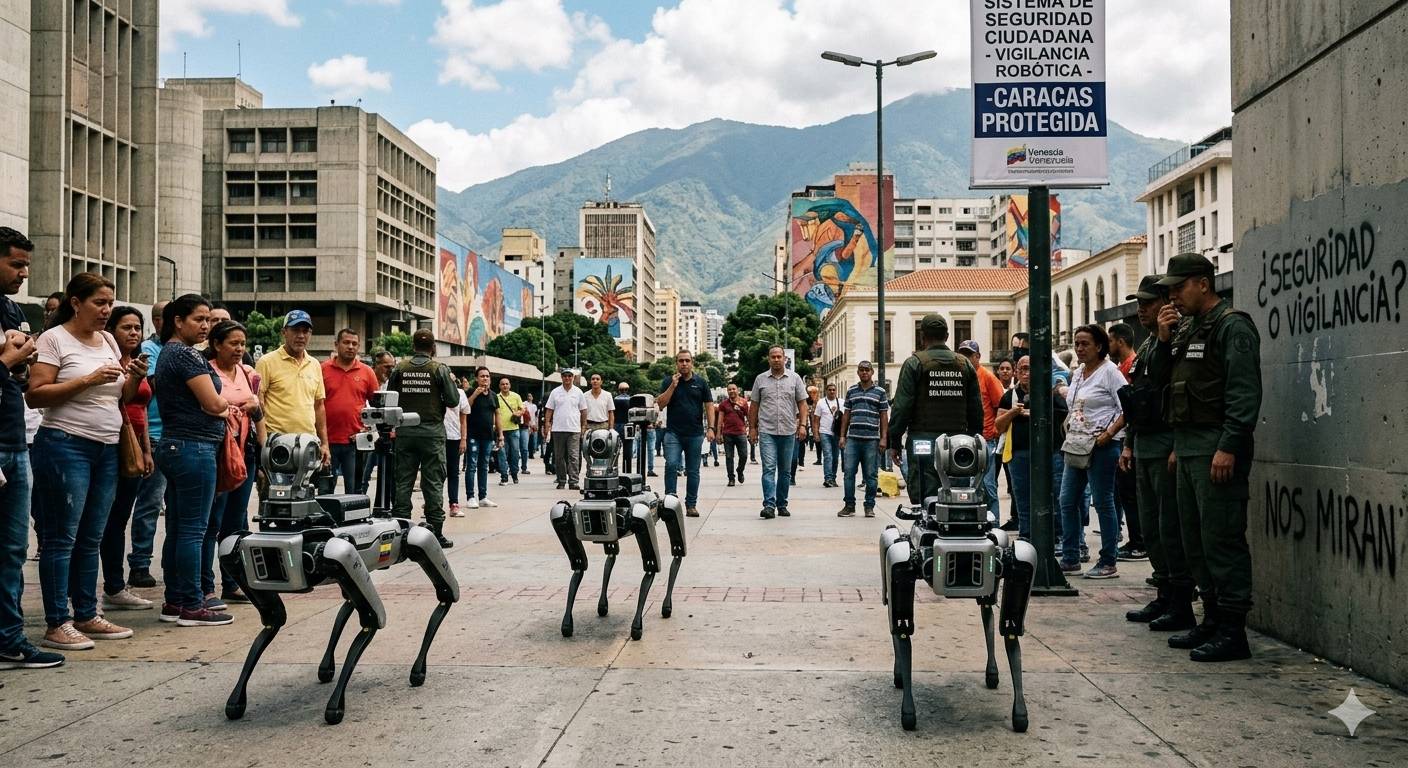
At the same time, governments are tempted to use AI to watch their citizens more closely. Tools originally developed to fight terrorism or crime can easily be repurposed to monitor dissent, track protesters or identify “troublemakers” in real time. What begins as a security measure can evolve into a system of digital social control. Authoritarian governments are already moving in this direction; democracies face the quieter danger of sliding into similar practices under the pressure of repeated crises.
The future of democracy in the age of AI will depend on rules and norms that are still only sketchily defined. Strong data protection, transparency in political advertising and clear labelling of AI‑generated content are obvious starting points. But deeper questions remain unresolved. Should there be limits on how much campaigns can personalise messages? Should AI systems that affect elections or public debate be subjected to independent audits, the way we test voting machines? And who should have access to the most powerful models: governments, companies, or an open community?
Citizens also have a role to play. Digital literacy—understanding how algorithms shape what we see and why—is becoming a civic skill as essential as reading and writing. Schools, media outlets and civil society groups will need to teach not only how to spot fakes, but how to interpret the incentives of platforms that profit from attention, not accuracy. If voters know that many of their online interactions are shaped by optimisation algorithms, they may become more cautious in how they treat political content.
Democracy has survived previous technological shocks, from the printing press to mass television. But AI is different in one crucial respect: it does not simply expand the reach of communication, it personalises and automates it at a scale humans cannot oversee. If societies wait until the worst abuses are visible, it may already be too late. The task now is to design institutions and safeguards that keep human judgment at the centre, rather than allowing invisible algorithms to quietly become the true arbiters of political life.