

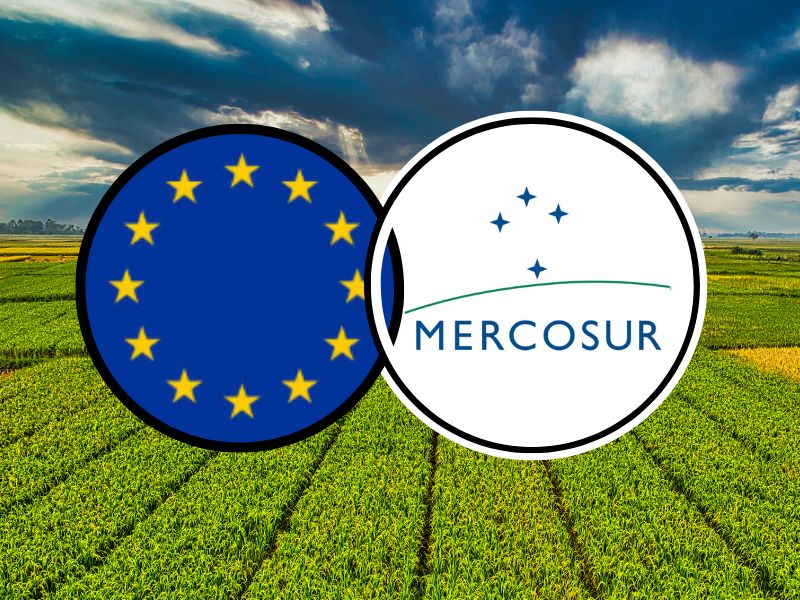
The EU–Mercosur trade agreement entered into provisional application on 1 May 2026, opening immediate tariff cuts and market access while leaving final ratification and several technical and political issues unresolved.
Background and how we got here
Negotiations between the European Union and the Mercosur countries (Argentina, Brazil, Paraguay and Uruguay) span more than two decades; the final political agreement was signed in January 2026 and the European Commission moved to apply the treaty provisionally so that trade measures take effect while national ratification processes continue. Provisional application was presented by Brussels as a way to deliver tangible economic benefits from day one, even as the European Parliament has referred legal questions to the Court of Justice of the EU.
What the provisional application does immediately
From 1 May 2026 the interim framework begins to reduce or eliminate tariffs on a large share of bilateral trade, open public procurement markets, and implement rules on technical barriers, sanitary measures and protection of geographical indications (344 EU GIs are protected under the deal). The phase‑out schedules are asymmetric and staggered: many industrial tariffs fall quickly, while sensitive agricultural lines move over longer transition periods.
Key political and technical sticking points
Despite the provisional start, several core issues remain unresolved. Within Mercosur there is no final agreement on how to allocate the preferential quotas for sensitive products (beef, rice, honey, etc.), creating the risk of a “first‑come, first‑served” dynamic at ports unless partners agree internal distribution rules. In the EU, parliamentary and legal scrutiny focuses on environmental safeguards and whether the agreement’s sustainability clauses are sufficiently enforceable.
Arguments in favour and expected gains
Proponents argue the deal will boost EU exports (machinery, cars, processed foods, wine and olive oil), increase services and investment flows, and give European firms access to large public procurement markets across Mercosur. Brussels projects substantial export growth and highlights the legal protection for European GIs as a commercial plus. For Mercosur partners, the pact promises improved access to a market of some 700+ million consumers and the chance to diversify export destinations.
Criticisms and risks highlighted by opponents
Critics warn of downward pressure on EU farmers’ incomes, potential increases in agricultural imports that compete with local production, and insufficiently binding mechanisms to prevent deforestation and environmental harm in South America. Civil society groups and some member states have demanded stronger, enforceable environmental clauses and independent monitoring. The unresolved quota allocation inside Mercosur also risks intra‑bloc tensions and market distortions.
What comes next and why implementation matters
Provisional application creates immediate commercial opportunities but does not guarantee political permanence: final ratification depends on national parliaments and possible rulings by the Court of Justice. To translate the agreement into broadly shared gains, policymakers will need clear quota rules, robust environmental verification, transition support for vulnerable sectors, and active social dialogue. If those complementary measures are weak, the pact risks political backlash that could stall or reverse parts of the deal.
Bottom line: the EU–Mercosur agreement is a landmark commercial opening with real economic upside, but its long‑term success hinges on resolving technical quota issues, strengthening enforceable sustainability safeguards, and managing the social and political adjustments on both sides.