

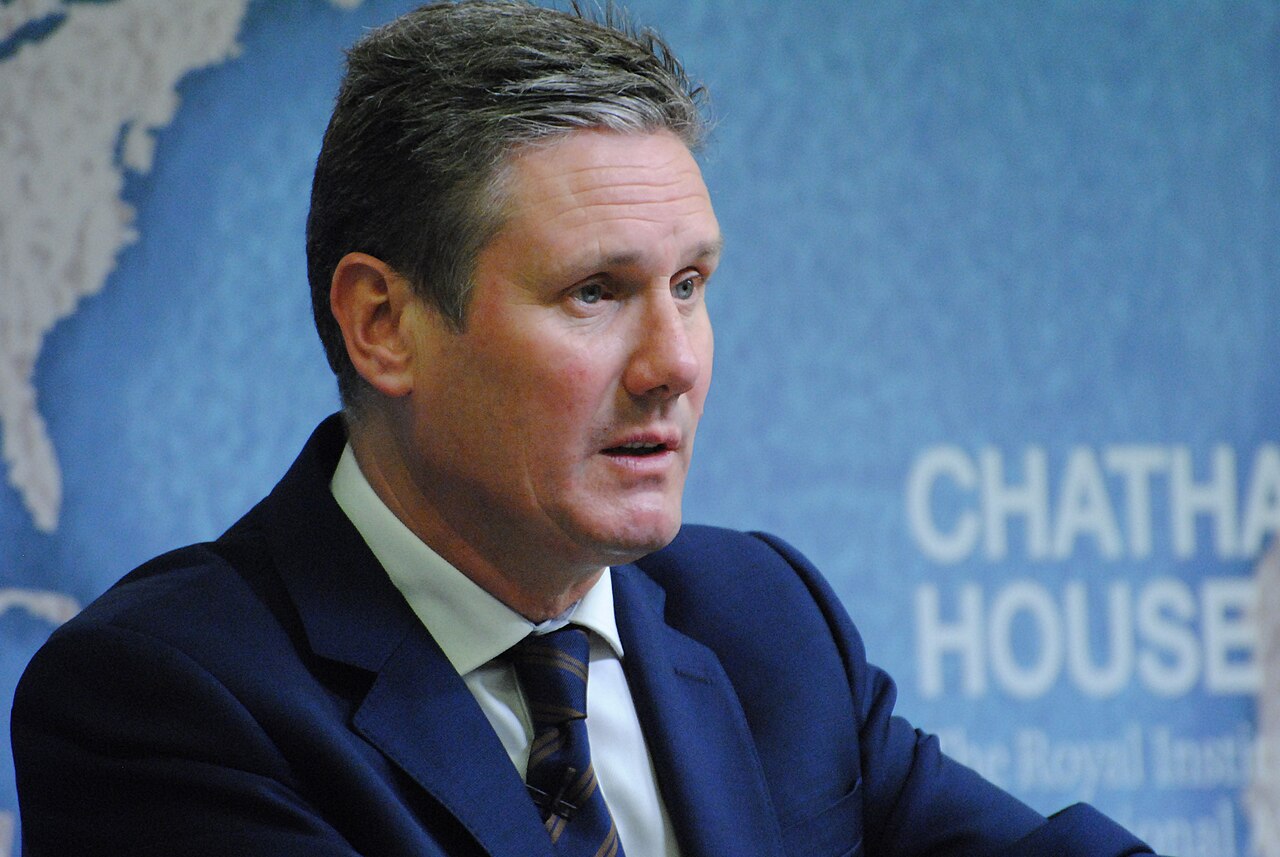
UK Prime Minister Keir Starmer has pledged to stay in office and rebuild the country’s relationship with the European Union, delivering one of his most pro‑European speeches to date. His remarks come after the Labour Party suffered a heavy setback in last Thursday’s regional and local elections, intensifying internal pressure on his leadership.
🔑 Key points
Speaking before Labour members, Starmer promised to “fight” to keep his position, arguing that he is responsible for delivering the political change he promised in 2024. He also declared that his government will work to place the UK “at the heart of Europe” again, reversing what he described as years of isolation.
Starmer stated that Brexit “made us poorer and weaker,” although he did not outline specific policy steps for a renewed partnership with the EU.
🇪🇺 “The last government broke our relationship with Europe; this one will rebuild it”
Starmer contrasted his approach with that of the previous Conservative administration, insisting that his Labour government will be defined by reconstruction rather than rupture. He argued that the UK needs a stronger economy, a more resilient defence strategy and a more robust network of international alliances.
A study from Stanford University, also cited by the Financial Times, estimates that the UK lost between 6% and 8% of its GDP as a result of Brexit.
🎯 Targeting Farage, not the Conservatives
The prime minister used his speech to criticise Nigel Farage, whose Reform UK party emerged as the major winner of the recent elections. Starmer accused Farage of making false promises about the benefits of Brexit, including claims of increased wealth, lower immigration and more funding for the National Health Service.
Notably, Starmer made almost no direct attacks on the Conservative Party, focusing instead on Farage’s influence.
⚠️ Internal challenge from Catherine West
Starmer’s speech must also be read in the context of a leadership challenge brewing within Labour. MP Catherine West warned over the weekend that she would push for a leadership contest if no government minister stepped forward to replace Starmer.
West, who represents Hornsey and Friern Barnet, initially suggested that the cabinet should reorganise itself and nominate a new leader to avoid humiliating the prime minister. However, on Monday she announced that she had begun the process of gathering support for September primaries, although she will not stand as a candidate herself.
She described Starmer’s speech as “too little, too late.”
🏭 Nationalisation of British Steel
Starmer also announced that the government will introduce legislation this week to allow the nationalisation of British Steel, the largest remaining steel producer in the UK. The company, owned by China’s Jingye Group, was already placed under emergency government control in 2025 to prevent the closure of its Scunthorpe blast furnaces.
Negotiations with potential buyers have failed, prompting the government to seek full ownership to safeguard thousands of jobs and preserve primary steel production in the country.
🏛️ New parliamentary agenda coming this week
The prime minister will unveil further measures on Wednesday as part of the government’s programme for the next parliamentary session. These proposals will be formally presented by King Charles III during the State Opening of Parliament in the House of Lords.